How Trees Around Your Home Can Slowly Damage Your Roof
Most homes have trees somewhere near the house. Trees can add shade, privacy, and make a yard feel more relaxing during the summer months. What many homeowners do not realize is the effects overhanging trees can slowly have on a roof over time. While storm damage is usually the first thing people think about, small everyday contact from branches, leaves, and moisture can also create roofing problems without homeowners even noticing.
A lot of this damage builds slowly over months and years. By the time leaks or visible roofing issues appear inside the home, the damage outside may already be much worse. Knowing what to look for early can help prevent larger repairs later and help extend the life of your roof.
3 Ways Trees Can Secretly Ruin Your Roof
The Sandpaper Effect
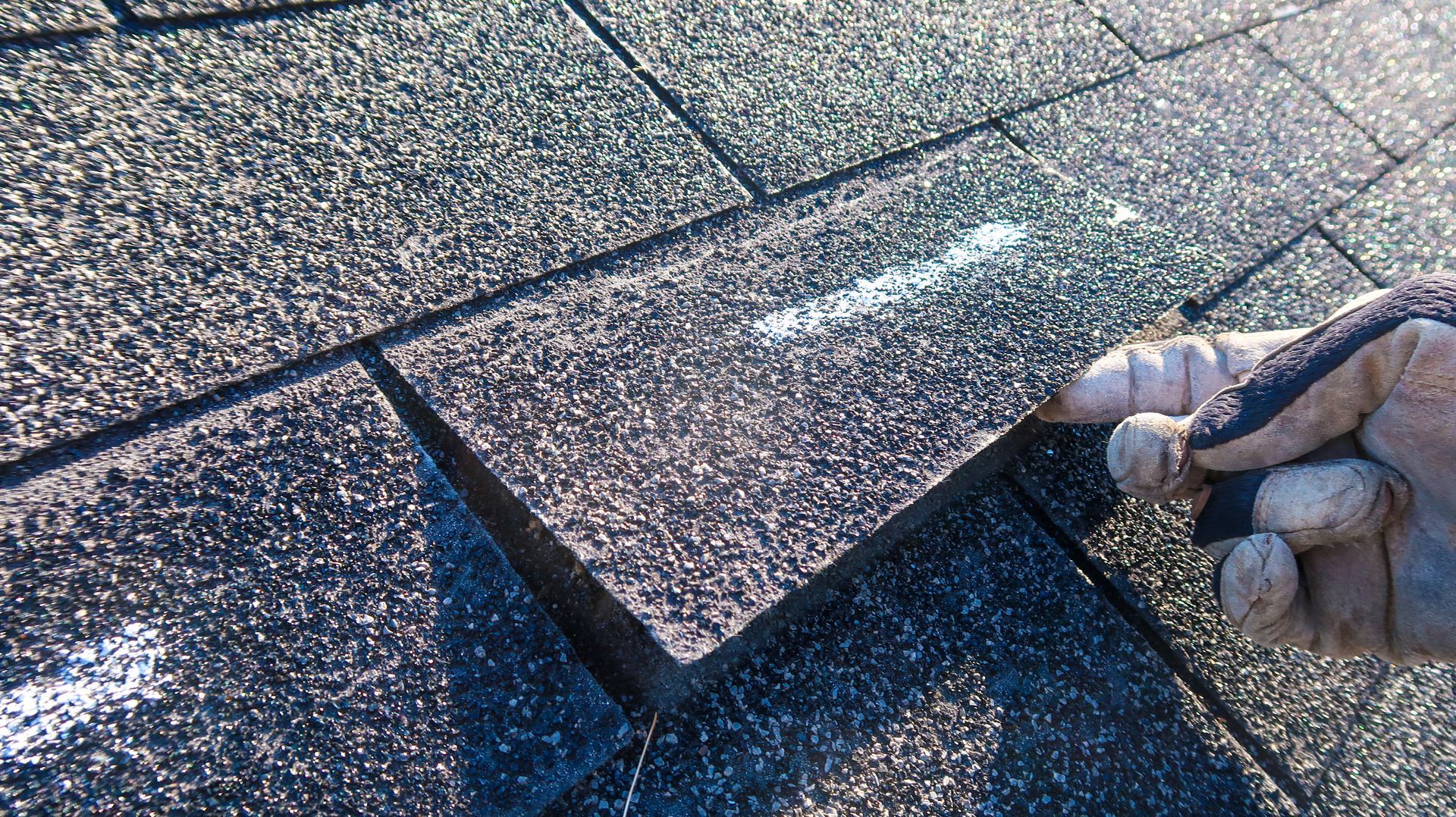
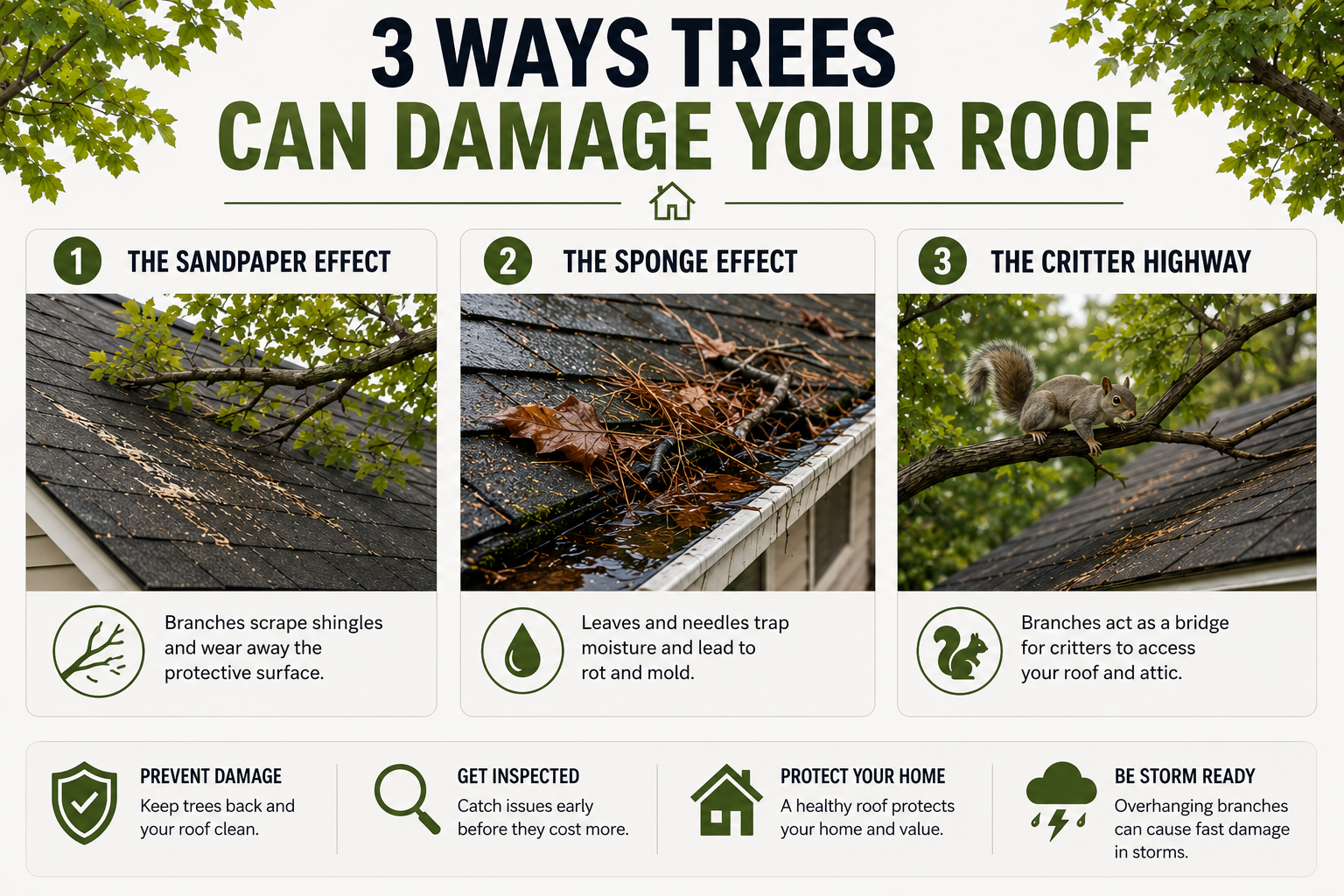
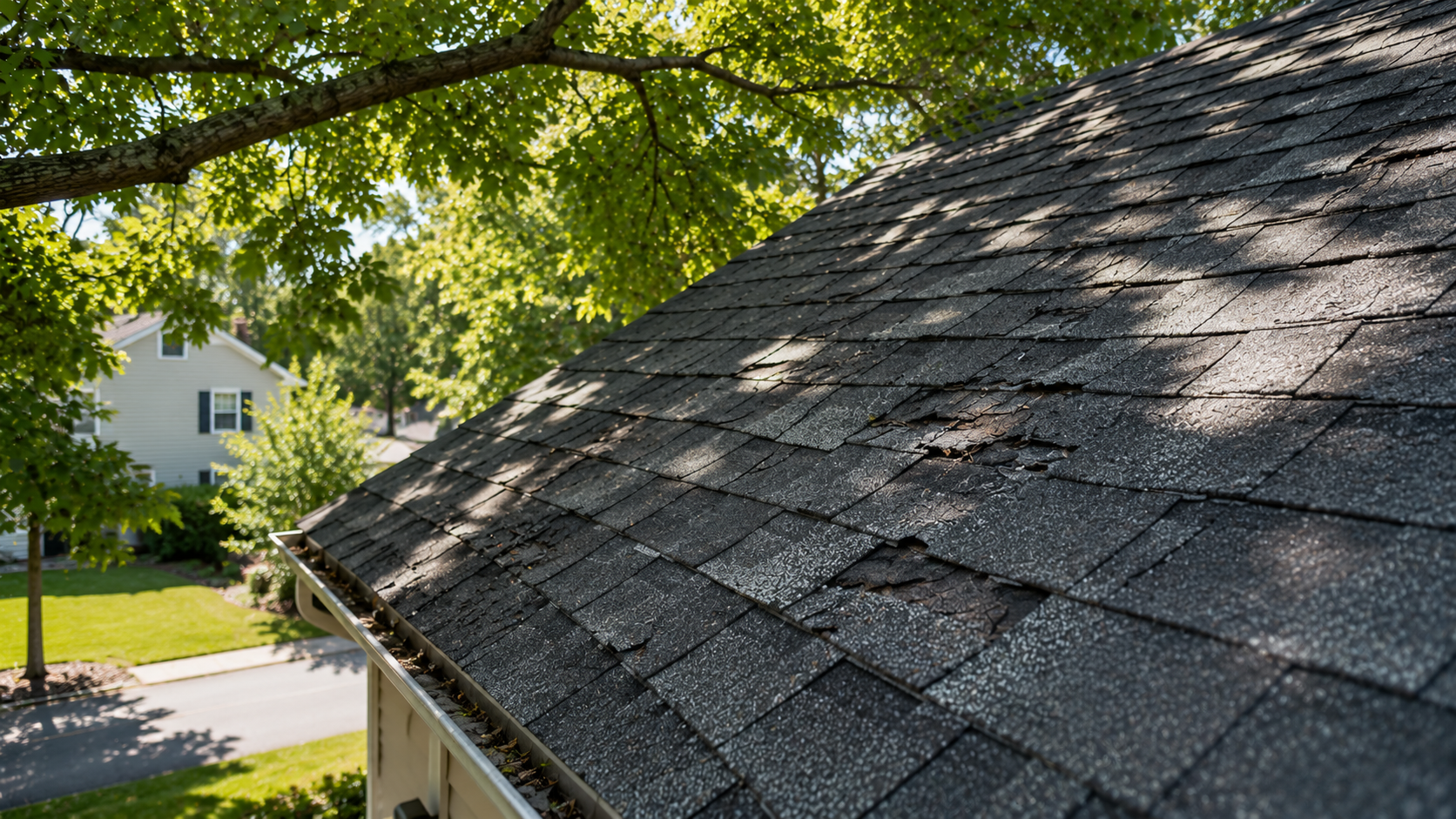
When wind blows, branches move around and scrape against the shingles on your roof. Even smaller branches rubbing the same area repeatedly can slowly wear away the protective outer surface of shingles. Over time this can weaken the roof and cause shingles to crack, curl, or wear out earlier than expected.
This type of damage is easy to overlook because it usually starts small. Many homeowners do not notice the problem until they begin seeing missing shingles, roof leaks, or visible roof wear from the ground.
The Sponge Effect
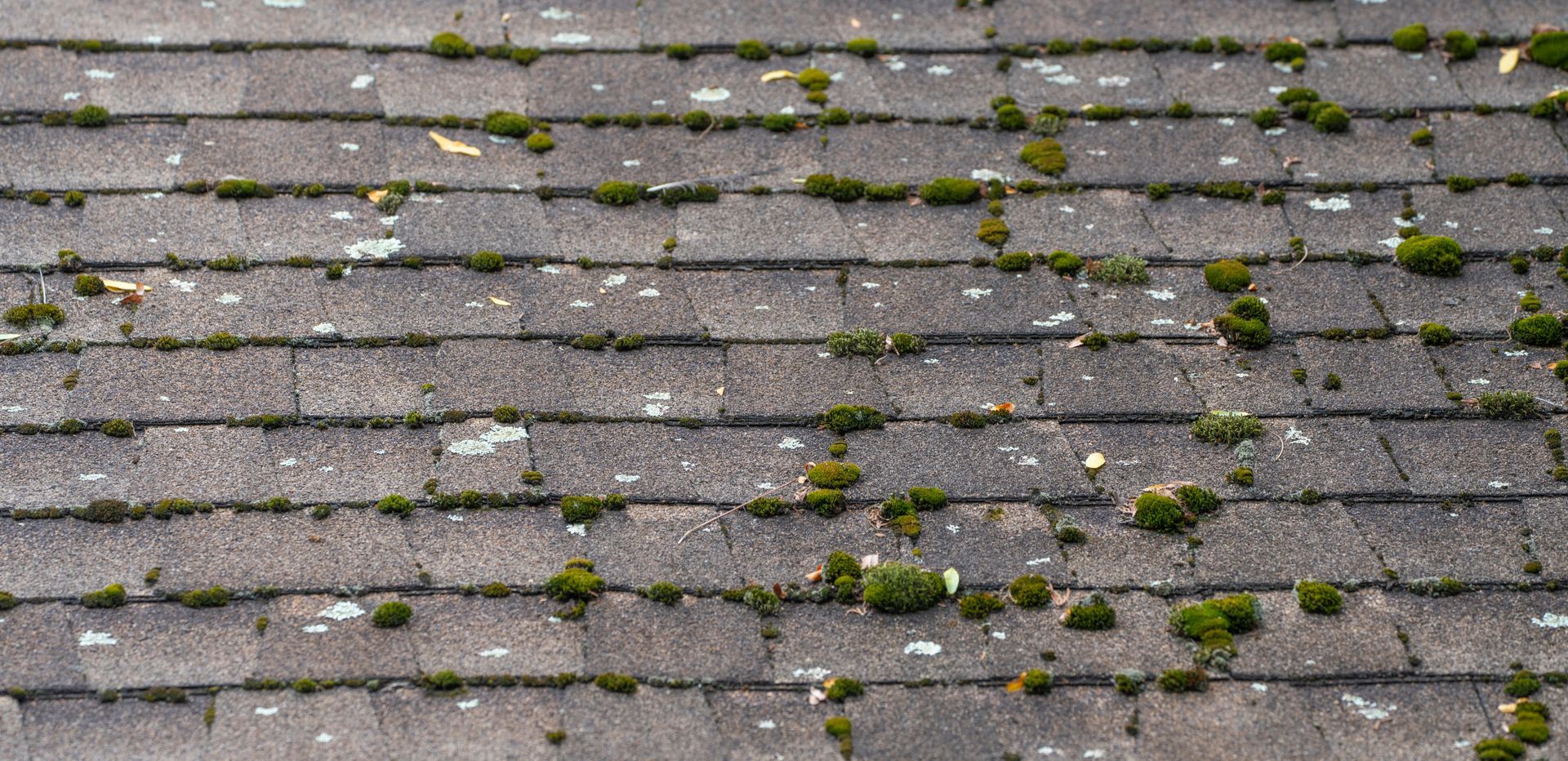
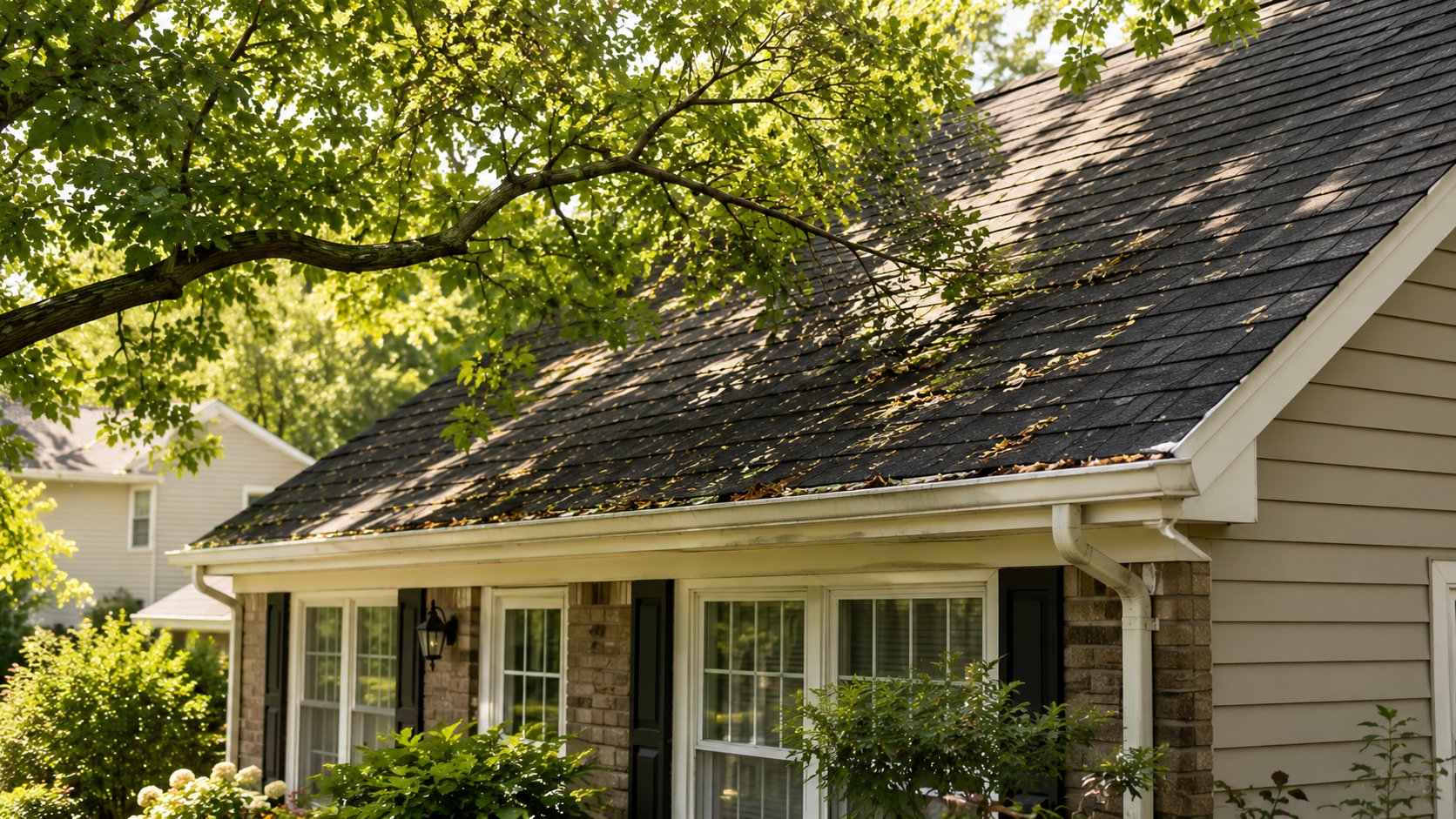
Leaves, pine needles, and small debris naturally collect on roofs and inside gutters throughout the year. When this buildup stays wet after rain, it traps moisture against the roof like a sponge. That moisture can slowly affect the materials underneath and create a damp environment where moss, mold, and wood rot can develop.
Debris buildup can also prevent gutters from draining properly. Water may begin backing up toward the roof instead of flowing away from the home like it should. While Roberts Roofs does not provide mold remediation, mold removal, or tree trimming services, these are still important things homeowners should watch for because they can affect the overall condition of the roof.
The Critter Highway
Overhanging branches also act like a bridge for squirrels, raccoons, insects, and other animals. Trees give them easy access onto the roof and around areas like soffits, vents, and attic openings.
Once animals start getting onto the roof regularly, they can damage roofing materials or find ways into attic spaces. Some homeowners first realize there is a problem after hearing noises above the ceiling or noticing damage around roof edges and vents.
Storm Damage Can Happen Fast
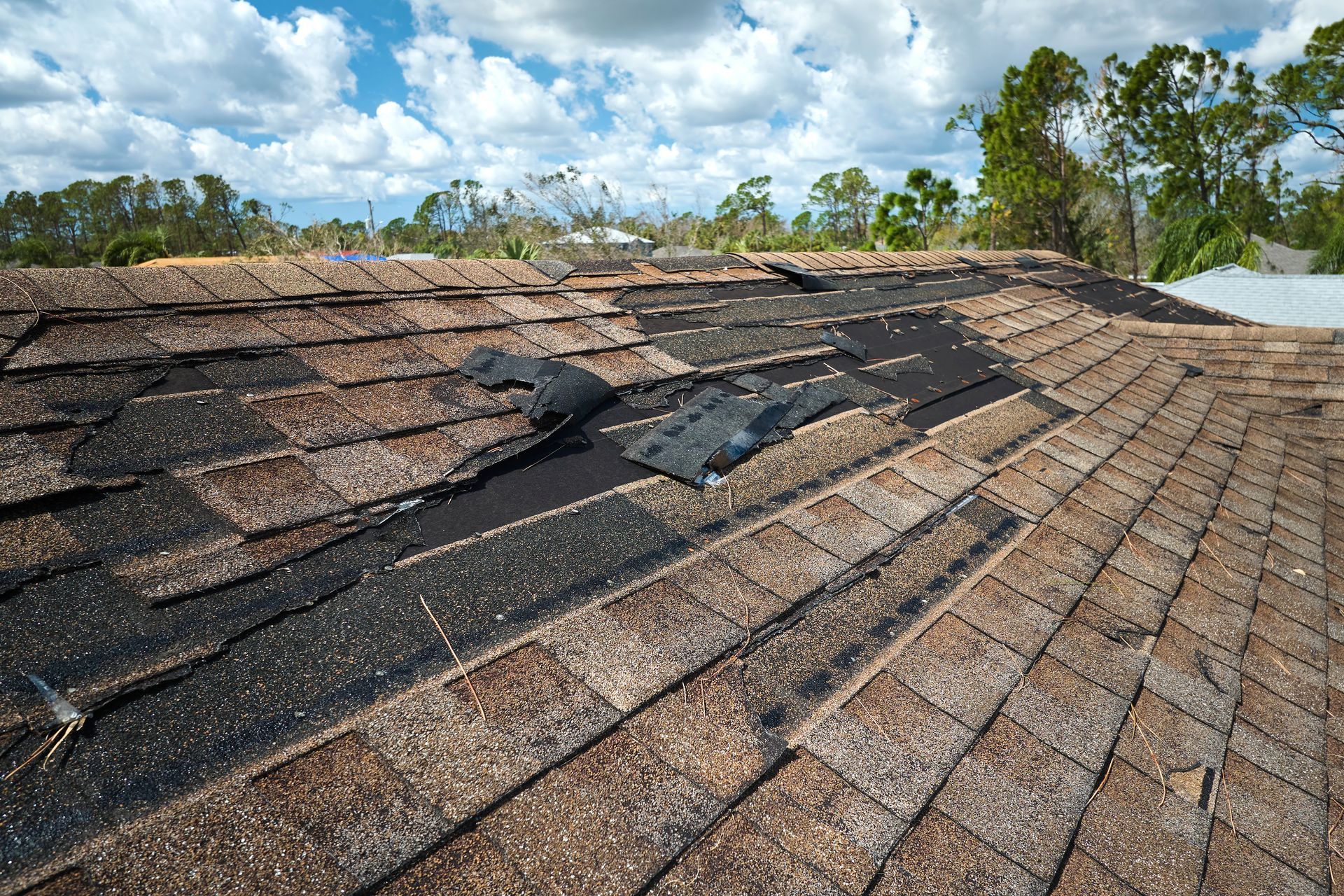
While slow damage is common, large branches can also create immediate roofing problems during strong storms. Heavy wind, rain, or snow can cause limbs to snap and fall directly onto the roof. Even smaller branches can damage shingles, flashing, gutters, and roof edges during bad weather.
After storms, it is always a good idea to look around the home for fallen limbs, debris buildup, or visible roof damage. Some storm damage is obvious right away, while other problems may not appear until water slowly works into damaged areas over time.
Insurance Companies Also Pay Attention to Overhanging Trees
Many homeowners do not realize insurance companies also look closely at roofs and nearby trees. During inspections for new policies or routine evaluations, overhanging branches can sometimes raise concerns because they increase the risk of roof damage. Branches hanging too close to the roof can lead to moisture buildup, damaged shingles, and storm-related problems over time.
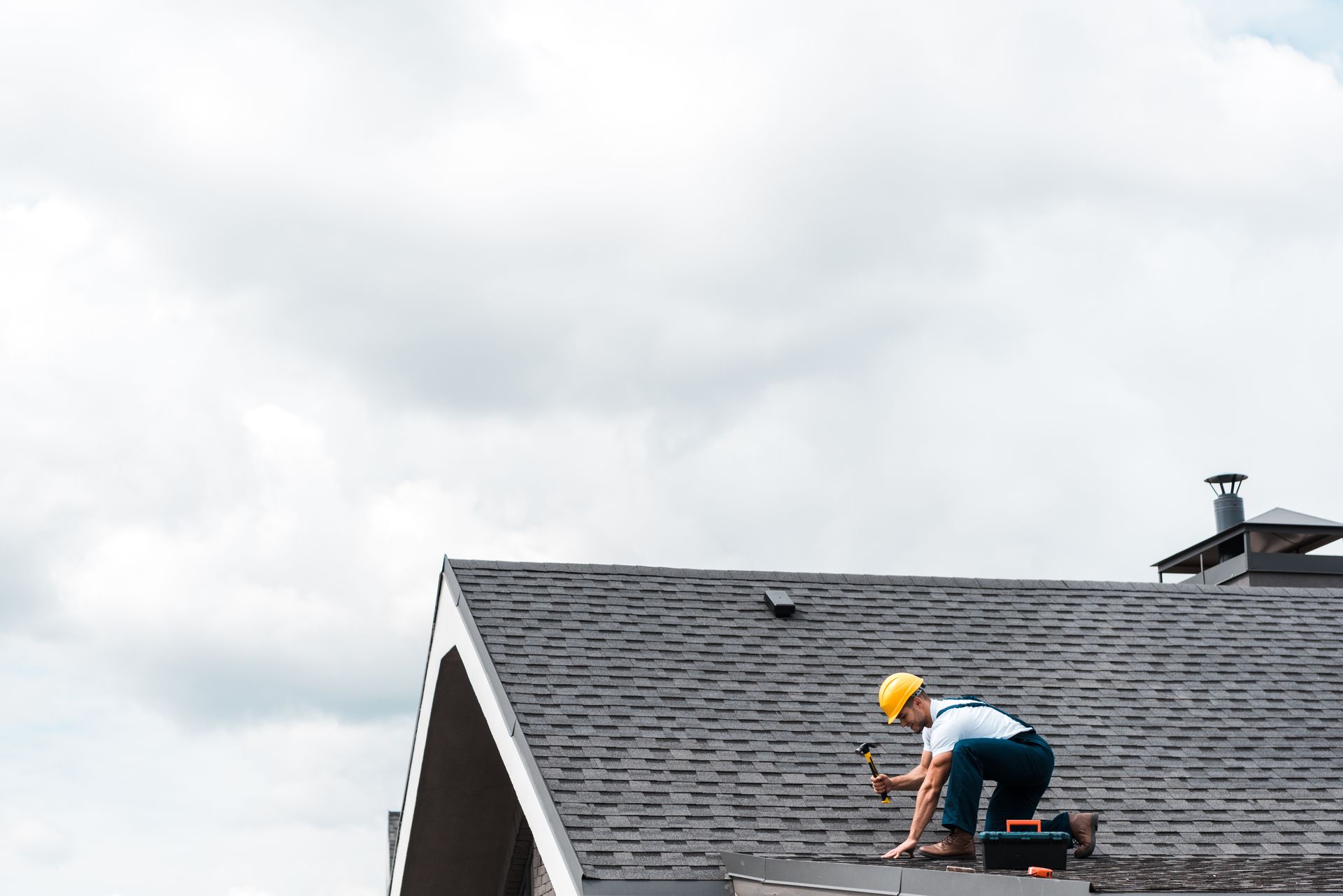
If you are starting to notice tree-related wear around your roof or simply want peace of mind, having a professional roof inspection can help identify any areas of concern early. At Roberts Roofs, Inc., we can inspect your roof to look for signs of damage caused by nearby trees and help guide you through the next steps if repairs are needed. Our team provides roof inspections, roof repairs, roof replacements, and emergency roofing services throughout Western Massachusetts.
Protecting Your Roof Starts With Paying Attention Early
Trees are a beautiful part of many properties across Massachusetts, but they can also create roofing problems when branches and debris are left unchecked around the home. Small signs of wear can slowly turn into larger roof repairs if they are ignored for too long.
If you think your roof may already have damage from nearby trees or recent storms, contact Roberts Roofs today. Our experienced team provides roof inspections, roof repairs, roof replacements, and emergency roofing services to help keep your home protected throughout every season.